Gunla Parva in Bhaktapur
A Month of Music, Merit and Living Heritage

For an entire month, the historic towns of the Kathmandu Valley take on a different rhythm.
Early in the morning, the sound of traditional Gunla Bajan moves through old streets and courtyards. Devotees visit Buddhist shrines, bahas and chaityas, offering prayers, making pilgrimages and performing acts of generosity.
In Bhaktapur, where ancient Newar settlements, Buddhist courtyards and living traditions remain woven into everyday life, Gunla offers a rare opportunity to experience the city beyond its famous squares and monuments.
At Nepal In Style Travel, we invite travellers to experience Gunla not simply as a festival to photograph, but as a living cultural experience in Bhaktapur.
What Is Gunla Parva?
The word Gunla is traditionally associated with Guna, meaning the accumulation of virtue and merit. The name is also believed to have evolved through a connection with Swayambhu and the traditional name Gongri or Gongrung Parvat, developing through Gunya into Gunla.
The month is deeply connected with Buddhist spiritual practice. Devotees use this period for daily worship, prayer, meditation, fasting and circumambulation of Buddhist shrines and chaityas.
At its heart, Gunla is about cultivating virtue, compassion, discipline and generosity.
This is what makes the festival particularly meaningful: these traditions are not performed simply for an audience. They remain an important part of the spiritual and social life of the community.
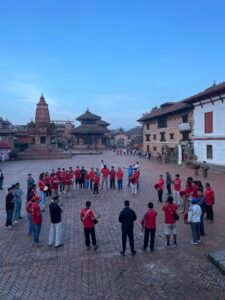
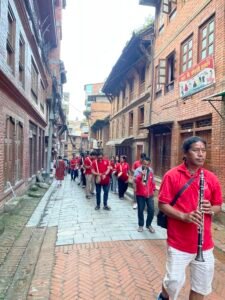
Gunla in Bhaktapur: When the Old City Comes Alive
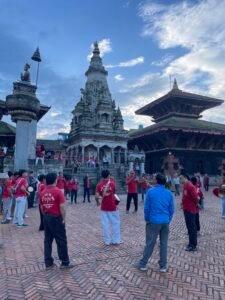
Bhaktapur is known for its medieval squares, temples, traditional houses and narrow brick-paved streets. During Gunla, however, experiencing the city goes far beyond its architecture.
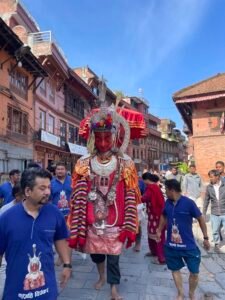
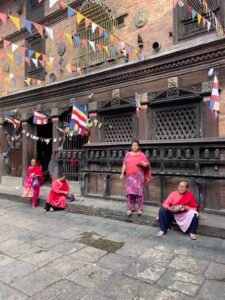
The sounds of traditional instruments can be heard as devotees gather for religious activities. People visit Buddhist courtyards, bahas and bahis, make offerings, chant prayers and circumambulate shrines and other sacred spaces.
The city becomes a place where music, faith, architecture and community life meet.
For visitors, this creates an opportunity to experience Bhaktapur not simply as a UNESCO heritage destination, but as a living cultural landscape.
Gunla Bajan: The Sound of a Sacred Month
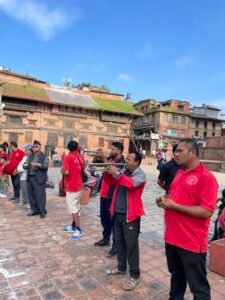
One of the most distinctive elements of Gunla is Gunla Bajan, the traditional Newar Buddhist music closely associated with the sacred month.
The tradition has deep Buddhist roots. According to cultural history presented by Gunla Baja Khala, musical traditions involving instruments similar to Dhaa Baja have connections with Buddhist traditions and stories dating to the period of Siddhartha Gautama.
The name later evolved into Gunla Baja during the Malla period, reflecting the music's close association with Gunla and its religious traditions.
Traditional Instruments
A Gunla Bajan ensemble may include:
Dhaa
Taa
Bhushyaa
Chhusyaa
Nayaa Khah
Karnal / Karna
Trumpet
Traditional performances also feature different rhythmic patterns and taals, including Dholayaegu, Chho Taal, Pra Taal, Jati, Palema, Astara, Lantaal and Gwara.
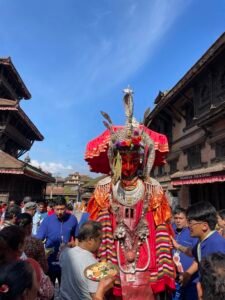
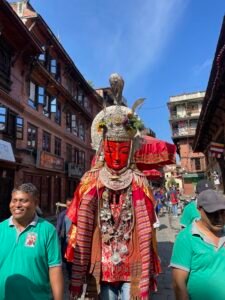
The Gunla Bajan Tradition of Bhaktapur
Bhaktapur continues to preserve several historic Gunla Baja groups.
Among those highlighted in the Gunla Parva presentation are:
Bishwakarma Gunla Baja Khala
A historic musical group with a tradition extending for more than 100 years.
Indrayani Gunla Baja Khala
Another important Gunla Baja group with more than a century of history.
Kwoneya Gunla Baja Khala
Established in B.S. 1978, with a tradition now extending beyond 100 years.
These musical groups represent much more than a performance tradition. They are part of the cultural continuity that keeps Gunla alive from one generation to the next.
A Month of Merit, Prayer and Generosity
Gunla encourages devotees to dedicate time to spiritual practice, reflection and acts of merit.
Daily activities may include:
Visiting Buddhist shrines and chaityas
Circumambulating bahas and bahis
Meditation and chanting
Recitation of Buddhist religious texts
Acts of charity and merit-making
Construction and restoration of chaityas
Traditional musical performances
Observance of the Panchasheel
Devotees also visit important Buddhist pilgrimage sites, including Swayambhu, Boudhanath and Namo Buddha.
For travellers interested in Buddhist culture, these traditions provide a deeper way to understand Nepal beyond its famous monuments.
Panchadan: The Tradition of Giving
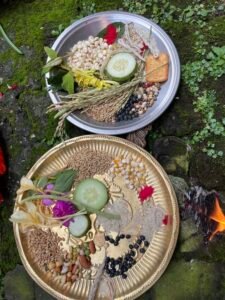
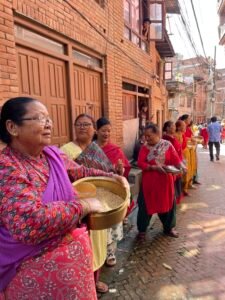
Another important tradition connected with Gunla is Panchadan, a practice centred on generosity and giving.
The word Panjara, associated with Panchadan, is explained through Pan, meaning earth, and Ja, referring to birth or origin. In this interpretation, Panchadan represents the giving of grains, food and other offerings that originate from the earth.
But Panchadan is much more than an offering.
What comes from the earth is shared with others.
This simple yet powerful idea expresses the spirit of the tradition.
Panchadan encourages generosity, compassion and service within the community, values that are central to the spiritual meaning of Gunla.
Dipankara Buddha and Gunla
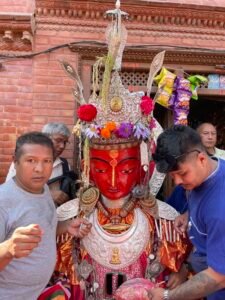
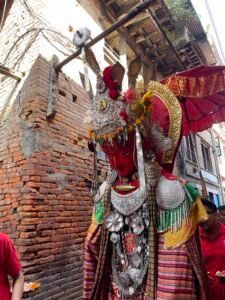
The figure of Dipankara Buddha holds a special place in Gunla and Panchadan traditions.
Dipankara is traditionally regarded as an ancient Buddha who lived long before Shakyamuni Gautama Buddha. He is also associated with the traditional prediction of the future appearance of Gautama Buddha.
During Gunla and Panchadan, devotees create and worship large images of Dipankara Buddha and make offerings.
For visitors, learning about Dipankara adds another layer to understanding the Buddhist traditions that continue to shape the cultural life of the Kathmandu Valley.
Major Festivals and Observances During Gunla
Gunla is connected with several important religious and cultural observances, including:
Nag Panchami
Yala Panchadan
Gunhi Punhi
Khwo Pa Panchadan
Baha/Bahi Puja
Yala Panchadan is observed on the eighth day of the bright fortnight of Shrawan, while Khwo Pa Panchadan is observed on the thirteenth day of the dark fortnight of Bhadra.
This rich calendar makes Gunla particularly interesting for travellers because there is no single “Gunla experience.”
Different days reveal different aspects of the tradition.
Gunla and Bhaktapur's Living Heritage
One of the most beautiful ways to experience Gunla is to look beyond the large monuments.
Walk through the smaller courtyards.
Listen to the musicians.
Watch devotees making their daily visits.
Look at the relationship between Buddhist shrines and traditional neighbourhoods.
Notice how people of different generations participate.
This is where the meaning of living heritage becomes clear.
Bhaktapur's heritage is not found only in its temples and palaces. It lives in its music, rituals, courtyards, festivals, food, craftsmanship and the people who continue these traditions.
Experience Gunla with Nepal In Style Travel
At Nepal In Style Travel, we believe travelling through Nepal should be about more than visiting famous places.
It should be about understanding the stories, meeting the people and experiencing traditions respectfully.
During Gunla, we invite travellers to explore Bhaktapur through its music, Buddhist heritage, traditional courtyards, sacred sites and community traditions.
Rather than simply watching a festival, our approach is to help visitors understand why the tradition matters and how it continues to shape everyday life in Bhaktapur.
A Meaningful Gunla Experience May Include
Early-morning heritage walks
Experiencing traditional Gunla Bajan
Visiting Buddhist bahas, bahis and chaityas
Learning about Dipankara Buddha
Understanding Panchadan and the tradition of giving
Exploring Bhaktapur's Buddhist heritage
Meeting local cultural practitioners where appropriate
Learning about the connection between Gunla and the wider festival calendar
Travel With Respect
Please remember: Gunla is a living religious tradition.
Photography, filming and participation should always be approached with respect and according to local customs. Visitors should follow the guidance of local communities, especially when entering sacred spaces or observing religious ceremonies.
Why Experience Gunla in Bhaktapur?
If you are looking for a cultural experience in Nepal that goes beyond the usual tourist trail, Gunla offers a rare opportunity.
It brings together:
Music. Faith. Architecture. Community. Generosity. Living Heritage.
And in Bhaktapur, these elements can still be experienced within the historic neighbourhoods where generations have continued these traditions.
Come for the heritage. Stay for the story.
Experience Nepal — Through Its People, Traditions and Heritage.
Nepal In Style Travel & Tours
Bhaktapur, Nepal
0 Response to "Gunla Parva in Bhaktapur"
Post a Comment
Thank you !!
Share with others